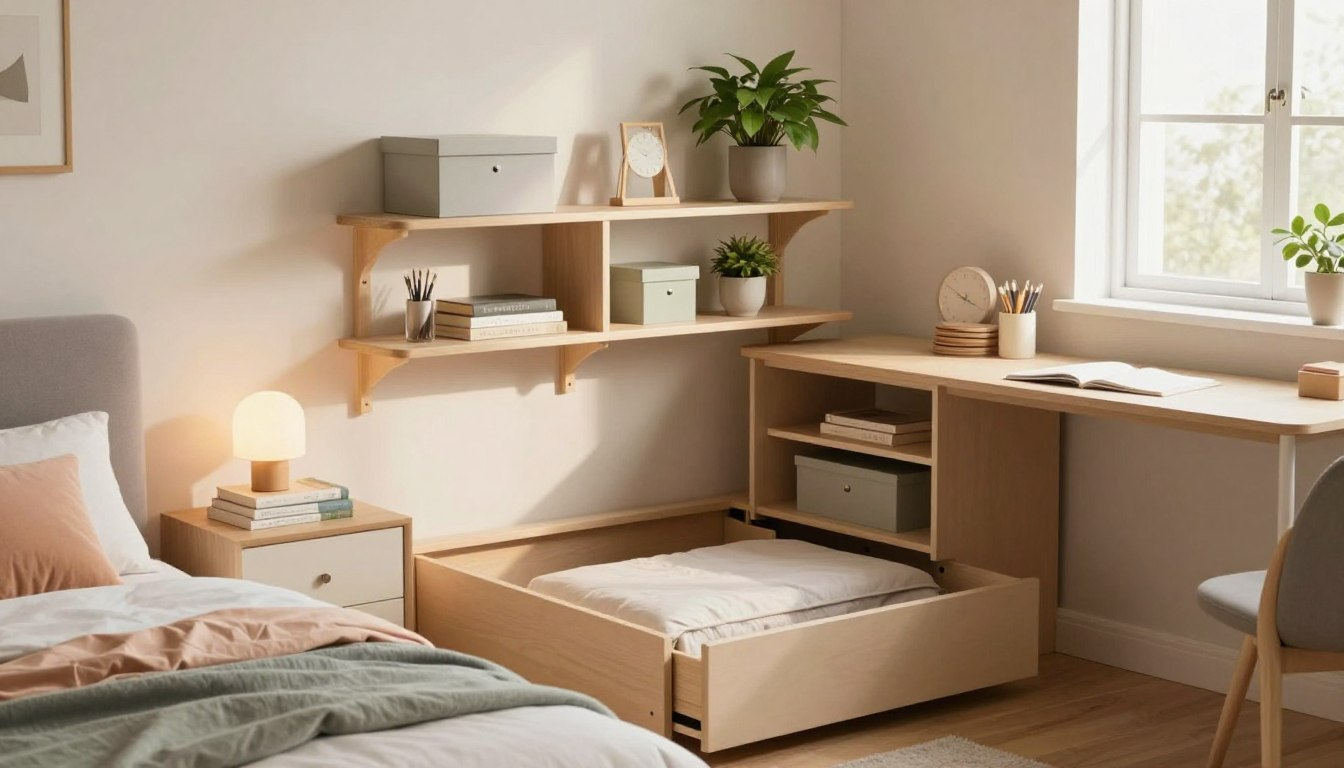
My first apartment bedroom was 9 feet by 11 feet, and I spent six months tripping over a laundry hamper because I hadn’t figured out that the space under my bed was worth more than the floor I was walking on to get around it. Small bedroom storage isn’t about buying more bins. It’s about noticing the parts of the room you’ve stopped seeing.
Map What You’re Not Using, Not What You’re Missing
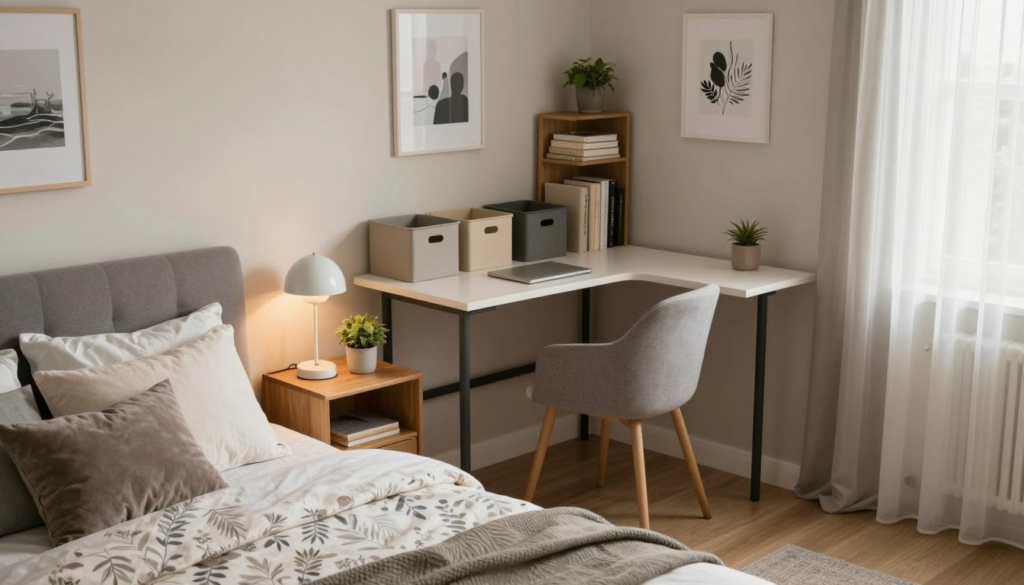
Walk your room and look at the gaps: above the closet door, the wall behind the bedroom door, the dead air between your dresser top and the ceiling. Most small bedrooms aren’t short on storage — they’re short on storage above eye level, because that’s the only zone nobody thinks to check.
I measured my floor space for two years and kept concluding I had no room for more furniture. The actual problem was that my dresser stopped 18 inches short of the ceiling and I never once looked up at that gap. Eighteen inches is enough for two shelves. In an 11-foot room, that’s not a rounding error.
Decluttering has to happen first, and “does it spark joy” is too soft a filter for a room this size. If you haven’t touched something in six months and it isn’t genuinely seasonal, it’s not on pause — it’s gone. I kept three boxes of kitchen gear “for when I move somewhere bigger” for two full years in the same apartment. I moved. I still hadn’t opened them.
The Under-Bed Space People Waste by Guessing
The area under a bed frame is usually the largest unused storage zone in the room, and most people ruin it by buying bins before measuring clearance. Bed frames range from about 4 inches off the floor to 12 — a bin that’s an inch too tall means you’re either shoving it under with a scraping sound every night or giving up and sliding it into a corner instead.
A bed frame with built-in drawers is permanent in a way that matters for renters specifically: you’re now hauling a heavier frame to your next place, and there’s no guarantee the drawer configuration fits your next bedroom’s layout. Rolling bins under a standard frame are the better bet if you expect to move in the next couple of years — they travel independently and resize to whatever room you land in next.
One thing that surprised me: clear bins are better for anything you touch monthly, but for genuine off-season stuff — the coat you wear twice in December — an opaque bin with the contents written on the end works better. Clear bins invite you to open them and refold things you don’t need to touch yet.
Vertical Storage Fails When It’s Decoration Pretending to Be Storage
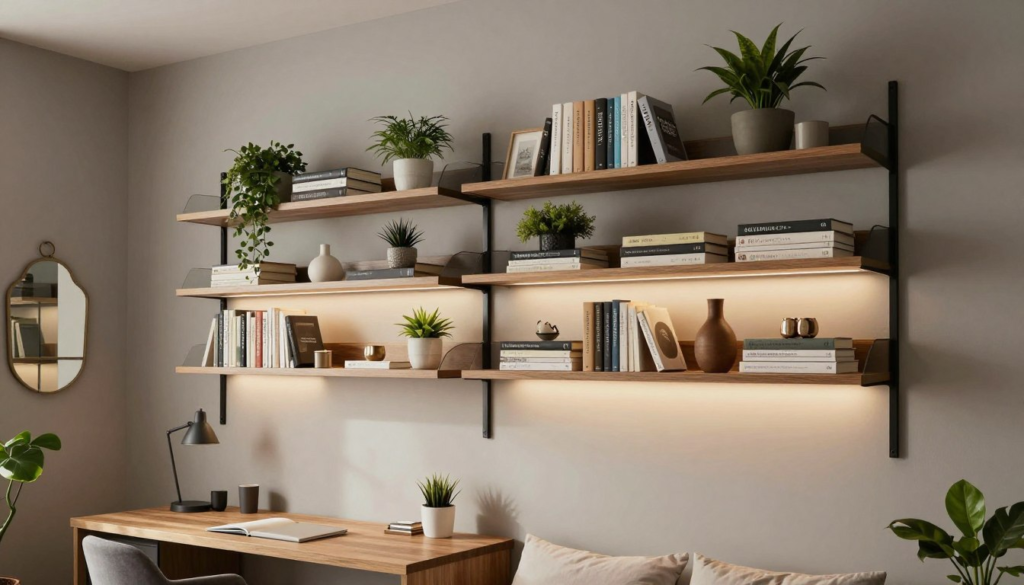
Floating shelves get recommended constantly, but the mistake is styling them like a magazine shot — a candle, a small plant, one book propped sideways — instead of loading them with things you actually reach for. A shelf holding folded sweaters near your closet does real work. The same shelf three feet away, holding decorative objects you never touch, is just a dust magnet with good lighting.
Wall hooks have the same problem. People hang one set by the door for keys and stop. A second cluster near the closet — bags, the jacket you wear four days a week, a scarf — keeps things off the back of your desk chair, which is where clutter actually starts in most bedrooms I’ve lived in. The renter catch: a hook holding a loaded bag every day needs a real anchor into the wall, not an adhesive strip. I’ve had a strip peel away half-inch of paint with it when a bag got too heavy.
The Closet Fix Isn’t More Bins — It’s Rod Height
A double-hang rod genuinely doubles hanging space, but only for short items: shirts, folded pants, skirts. If your closet is already full of coats or long dresses, a second rod underneath just sits there unused because you can’t lower it enough to clear the floor without the first rod being in the way. Know what’s actually hanging in your closet before buying rod hardware — I didn’t, and mine sat empty for a year.
Slim velvet hangers are one of the rare space hacks that actually delivers — you reclaim real width because the savings come from the hanger’s shoulders, not the fabric. But they only hold their shape under light garments. A wool coat on a slim hanger stretches at the shoulder seams within a season. Keep three or four sturdy wooden hangers for coats and blazers specifically.
Furniture Has to Earn Its Footprint, Not Just Look Multi-Purpose
I bought a storage ottoman expecting to use it constantly. For an entire year it sat almost empty, because lifting the lid to grab a blanket felt like more effort than it was worth for something I wanted daily. It works for things you touch three or four times a season — guest bedding, off-season pillows — not your regular throw blanket. If you’re buying one to store daily-use items, you’ll probably stop using it within a month, same as I did.
A nightstand with multiple drawers beats one with a single open shelf for a specific reason: separate drawers let you keep chargers away from skincare instead of everything sliding into one shared bin. An open shelf under a lamp turns into a junk pile within about three weeks — I’ve watched this happen in three different apartments, mine and friends’.
Doors and Corners Are the Free Real Estate Nobody Uses
An over-the-door shoe organizer is one of the best-value cheap fixes available, but only the clear-pocket version, not canvas. Canvas pockets are deep enough that things vanish into the back and you forget what’s there — I found a phone charger I’d been missing for four months in one. If you already know you’re not naturally tidy, the see-through version is the honest choice even if it looks slightly less finished.
Corners get skipped because most furniture is built for straight walls. A narrow corner shelving unit fills a section of the room that would otherwise stay permanently empty. The catch is shelf depth — corner units are usually shallow, so they’re better for books and small display objects than for folded sweaters.
Mirrors and Light Change What Your Storage Actually Looks Like
A mirrored wardrobe door does two jobs: gives you a full-length mirror without using extra wall space, and visually doubles the room’s depth, which matters more in a small bedroom than almost anywhere else because you notice the size every single day. But a mirror facing a messy closet interior just reflects the mess back — I had this exact setup for months before realizing the mirror was making my room look more cluttered, not less.
A $12 stick-on LED strip inside a closet does something I didn’t expect: it makes you actually see what you own. I found three black belts I’d forgotten I had within a week of installing one. That’s not a design trick, it’s just better visibility leading to less duplicate buying.
Staying Organized Is a Five-Minute Habit, Not a Weekend Project
The only maintenance trick that’s ever stuck for me is a five-minute reset before bed — returning three or four things to where they belong, not a deep clean. It works specifically because skipping it once doesn’t collapse the whole system. Most organizing projects fail not because the storage was wrong, but because people expect one big weekend to hold for a year without any daily upkeep.
Labels matter for a boring, practical reason: a labeled bin means you don’t open four containers hunting for one scarf. That search — not the mess itself — is usually what breaks an organized system down over time.
Conclusion: Cheap Fixes Worth Doing, and One That Isn’t
Painted wooden crates make decent shelving, but only if you screw them together and anchor the stack to the wall. A friend’s stack of loose, unsecured crates tipped over with books inside — not a risk worth taking to save thirty dollars over a real shelf bracket.
Foam board dividers under the bed solve a real problem — small items sliding around inside a big bin — but only if you measure the actual bin first. A divider cut for the wrong size just becomes one more thing cluttering the space you were trying to organize.
A small bedroom doesn’t need more stuff to feel finished. It needs everything you own to have exactly one place it goes back to. That took me longer to actually believe than any shelf or bin ever did.
FAQs
Is under-bed storage actually worth it, or is it just extra cleaning to deal with?
It’s worth it if you measure clearance first and pick bins that match how often you access them. Seasonal stuff in opaque bins with labels is low-maintenance. Daily-use items under the bed usually become a hassle because bending down and pulling out a bin isn’t something you’ll do consistently — better to keep those items somewhere at hand height.
Will floating shelves damage my walls when I move out?
It depends entirely on how they’re mounted. Adhesive-strip shelf brackets rated for light loads are generally safe to remove cleanly, but anything holding real weight — books, especially — needs a screw-in anchor, which does leave small holes. Those are usually fine to patch with spackle and touch-up paint, which most leases allow for minor wear.
What’s the best storage option if my bedroom doesn’t have a closet at all?
A freestanding wardrobe or a heavy-duty garment rack does the job, and a mirrored wardrobe door is worth the extra cost because it doubles as both storage and a full-length mirror without using more wall space. Garment racks are cheaper but expose everything, so they work better if you’re already fairly tidy about folding and hanging.
Do I really need to buy special bins, or can I just use whatever boxes I have?
Cardboard boxes work short-term but degrade with humidity and don’t hold up under a bed where dust and moisture collect. If you’re storing things longer than a season, spend the small amount on proper plastic bins — it’s one of the few storage purchases where the cheap version genuinely costs more over time.
How much can slim hangers actually help in a small closet?
More than people expect for lightweight clothes — you can typically fit 20 to 30% more on the same rod. But they’re not a fix for a genuinely overstuffed closet. If you’re still cramming clothes in after switching hangers, the real issue is you have too many clothes for the space, not the wrong hangers.
Are over-the-door organizers only good for shoes?
No — they’re actually more useful for smaller accessories like scarves, belts, and tech cords, since shoes are often too bulky for the pockets on cheaper versions. Check the pocket depth before assuming it’ll fit boots or sneakers; a lot of them are sized for flats and sandals only.